Showing posts with label Antiquities. Show all posts

Sunday, 30 July 2017

The Mosque of Al Refaie

Mosque of Al Refaie

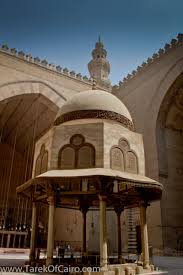
The mosque of Al Refaie' is considered one of the remarkable Islamic structures in Cairo. The mosque is located in the Qala'a square in front of the citadel just facing the great Mosque of Al Sultan Hassan. The Refaie Mosque was embellished by Khoshiar, the mother of Khedive Ismail to be the mausoleum of the royal family. 


Nobody knows why exactly did Khoshiar choose that location this small "Zaweya" praying place, to build the mosque. Maybe because she wanted to build a mosque that is similar to that of Al Sultan Hassan in its size and greatness. She wanted to renew the Zaweya of Al Refaie so she bought all the surrounding areas around it and then she destroyed the Zaweya all in all and started to build a new huge mosque. 

The mosque was built on the site of an older mosque called mosque of "Al Zakhira" which was built in the Ayubids era and it contained the dooms of many Islamic Imams and religious people. 

Although the mosque of Al Refaie is named after Sheikh Ahmed Al Refaie who was the Sufi leader of Al Refaieya method, he was never buried there. He was actually never buried in Egypt. However, the Zaweya continued having the name of Al Refaie and afterwards an ancestor of Al Refaie, Sheikh Abu Shebak was buried there. 

Egyptian best construction engineer at the time, Hussein Fahmy Pasha made a design for the new mosque to contain the tombs of the royal family. He also added two domes for the two sheikhs who were buried there, Ali Abu Shebak and Yehia Al Ansary.

However, in 1881 the building work stopped to add some changes to the design, but the whole process stopped with the death of Khoshiar Hanem in 1885 and she was buried in the mosque.

Twenty five years later, when Abbas Helmy the second became ruler of Egypt, he ordered Hatz Pasha, the director of the association of Egyptian Antiquities at the time, to continue building the mosque. 

The mosque was first opened for public on Friday of the year 1912. 

The Mosque of Al Refaie was built to look like the great mosque of Al Sultan Hassan in its size, height, and luxury. It contained huge entrance gates with tall columns made out of rock and marble with rich Arabic decorations. The builders of the mosque didn’t want it to appear like an elf beside the giant. 


The mosque from inside has a rectangular shape with the area of 7500 meter with 1767 meters prepared for praying and the rest was built as a mausoleum. 


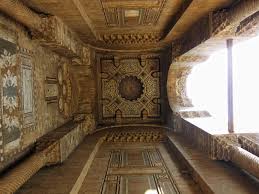
The main gate of the mosque is located in its western side and above it lays a dome which is decorated with gold. Then there is a door that leads to the tombs of Abu Shebak and Ali Al Ansary. 

Most of the walls of the Mosque are decorated with colored marbles that were imported from seven countries from all around the world. The walls, doors, and windows of the mosque is highly decorated with Abanos wood and a lot of golden ornaments. 

The Mihrab of the Mosque is located inside its Eastern walls and it is clothed with colored marble and has four marble columns. There are five colored lines drawn inside the Mihrab and some of them contain golden ornaments. 


Beside the Mihrab, there is the fascinating Minbar which was decorated with ivory, ebony, and mother of pearl. It has a quite unique style as it was made in the Mamluk way. The small door of the Minbar is rich with wooden decorations. 

One of the most remarkable items of the mosque is its white pure alabaster Dekka, or place of the prayer caller. It is unique in its design and decorations that you don’t find anything like it in the whole country of Egypt. It is built on eight white marble columns holding it and it contains some Quran inscriptions which were written with pure gold. 

In the northern side of the mosque, there are six gates. Four of them lead to the burial rooms of the kings, queens, and royal family. 


The first of these rooms contains the tombs of four of the Khedive Tawfik sons and daughters: Wahida who died in 1858, Zeinab who died in 1875, Ali Gamal El din who died in 1893, and Ibrahim Helmy who died in 1926. There is a beautiful small dome above this room which is decorated with Quranic inscriptions.

To the west, there is another room where Khedive Ismail and his mother, Khoshiar Hanem, the builder of this mosque were buried. 

Afterwards, there is the room where the daughters of Khedive where the wives of Ismail were buried and they are: Shohrat Vasa who died in 1895, Ganayar who died in 1912, and Gushm Afet who died in 1907. 

There is a door from this room that leads to the room where Sultan Hussein Kamal, the son of Ismail who ruled Egypt in 1914 and died in 1917 to be followed by his brother kind Farouk. 

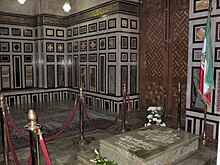
The Shah of Iran, Mohamed Reda Bahlawy, the former husband of queen Fawzeya was buried in the Mosque of Al Refaie and this incident has a tragic story behind it. When the Islamic revolution rose in Iran, he was exiled. He couldn’t find a place to host him until the former Egyptian president Anwar El Sadat welcomed him in Egypt and when he died, Al Saddat ordered that he should be buried in the Mosque of Al Refaie. His tomb room is one of the most amazing in the mosque as it is decorated with beautiful marble floor and walls. Strangely enough, the father of the Shah was buried for some time in the same room. 

Beside the room of the Iranian Shah, there is the burial room of king Foaud (1868- 1936). In the eastern wall of this room, there is a door that leads to the tomb of king Farouk who died in Rome in 1965. 

King Farouk wanted to be buried in the Mosque of Al Refaie beside his family and relatives. However, the former Egyptian president at the time, Gamal Abdel Nasser, didn’t like the idea. He agreed that King Farouk can be buried in Cairo but not in the Mosque of Al Refaie and this is what actually happened. Until in 1970, when Nasser passed away, the body of King Farouk was transferred to the Mosque of Al Refei.

Saturday, 29 July 2017

Tut Ankh Amun and his Treasures

 Who was Tut Ankh Amun?

King Tut Ankh Amun was one of the kings of the 18th dynasty of the New Kingdom of the Pharaonic period. He was the ruler of Egypt from 1334 till 1325 BC.


Tut Ankh Amun became the king of Egypt when he was only 9 years old. The word “Tut Ankh Amun” in the ancient Egyptian language means “the living incarnation of Amun”, the most important god in ancient Egypt.


Tut Ankh Amun lived in a transitory period of the ancient Egyptian history as he became the ruler of Egypt after Akhenaton who tried to unify the multi gods system in Egypt into the worship of only one god, Aton, the god of Sun.

However, when Akhenaton passed away and Tut Ankh Amun became his successor, the multi gods system became prominent in Egypt once again.


King Tut Ankh Amun became one of the most famous Pharaohs throughout history, not because of any achievements he has done, but because of many other several reasons especially the discovery of his tomb in 1922 and that all the items and the treasures of his tomb were found intact and untouched in contrary to all the other Pharaohs of Egypt. 

Another reason behind the world wide fame of the King Tut Ankh Amun was his death in an early age, an incident that many historians find to be strange especially after checking out his mummy and finding out there were some cuts fractures in his skull.

Most of the historians and Egyptologists believe that Tut was the son of Amenhotep IV, better known as Akhenaton. It is also believed that his ruling period lasted only from 8 to 10 years. 


When scientists examined the mummy of Tut Ankh Amun, they found out that he died while he was young as he was less then 20 years old when he passed away and his age was determined later to be 19 years old when he died.


During the ruling period of Tut Ankh Amun, a revolt began in Tell El Amarna, against the former king of Egypt at the time, Akhenaton, who dislocated the capital of Egypt from Thebes to his new city, Akhet Aton which was located near the governorate of Al Minya today.


In 1331 BC, in the third year of the reign of Tut Ankh Amun, the multi gods system became prevailing once again and the capital went back to Thebes again as well.   

The Reasons Behind the Death of Tut Ankh Amun

For a very long period of time the reasons behind the death of Tut Ankh Amun was always debatable and many historical theories asserted that he was murdered.


However, when the mummy of Tut Ankh Amun was scanned using the three dimensional CT, the famous Egyptian Egyptologist, Zahi Hawas, announced that there are no evidences whatsoever that prove that Tut Ankh Amun was murdered.

Hawas added that the hole King Tut had in his skull was not due to the fact that he was hit in his head as it was believed in the past, but it was due to the mummification of the king after his death.

Hawas also noted that the fracture that was found in one of the thighs of Tut Ankh Amun was not due any criminal actions but it was because King Tut had a break in his leg before he died.

The final report of the Egyptologists who examined the mummy of Tut Ankh Amun concluded that the reason behind his death was due a blood poisoning that he was exposed to and led to his death.  

The Story of the Tomb of Tut Ankh Amun

The Tomb of Tut Ankh Amun was discovered in the 4th of November 1922 by the British archeologist that has become world wide famous after this discovery, Howard Carter.

While Carter was doing some excavation works in the tunnel leading to the tomb of Ramses IV in the Valley of the Kings, he noticed that there was a large cellar. Carter went on with his excavation until he entered the tomb of Tut Ankh Amun.  

The small burial chamber of Tut Ankh Amun had wonderful portrays telling the story of the death of the king with marvelous colors and decorations.

This discovery was considered among the most important scientific discoveries in the 20th century due to the fact that the mummy of the king Tut Ankh Amun was found instinct and in a fairly good condition with all its wonderful necklaces, rings, sticks, and crowns that are made out of gold and the purest types of wood.


Moreover, Howard Carter was the first person to enter the tomb of Tut Ankh Amun in around 3000 years as the tomb was hidden in the sand of the mountain for centuries.

Carter noticed that there is a wooden box with golden ornaments in the middle of the burial chamber and when he opened this box, he found another similar wooden golden ornamented box. When Carter opened the second box, he found a third box, and at the end Carter was able to find the sarcophagus of the king that was carved to like Tut Ankh Amun. 

When Carter opened the sarcophagus, he was able to find the main golden coffin of the king Tut Ankh Amun and the most valuable item in the tomb that still amazes the whole world with its beauty. 

Howard Carter had to cut through three golden coffins in order to reach the mummy of Tut Ankh Amun which was carefully rapped in silk cloths.  At the end, when Carter was able to take off the whole shroud, he found the mummy in a good condition and he was wearing all his royal necklaces, rings, and his pure golden stick and crown.

The Treasures of Tut Ankh Amun


The Tomb of Tut Ankh Amun was discovered almost intact and this was why the items that were found inside the tomb clarified many facts about the religious and the funerary beliefs of ancient Egypt.


The King or the Pharaoh of Egypt was always buried with all his personal belongings including all the items that he used since he was a child like some of his toys.


Moreover, all the other things that the king has used during his like pencils, colors, outfits and clothes, and jewelry that he would use in the afterlife.


Among the most important items of the tomb of Tut Ankh Amun is the only surviving throne chair that dates back to ancient Egypt. There is also chariot that is pulled by horses, and some weapons including swords, daggers, arches, and bayonets.


The most precious items that were found in the tomb of Tut Ankh Amun are his golden coffin that weighs more than 110 kilograms of pure gold, his golden mask that is ornamented with precious stones which weighs 11 kilograms, and two other coffins that were made out of wood that is ornamented with gold, and 314 “Shobaty” statues, which were put with the deceased to work in stead of him in the afterlife.


Archeologists were also able to find 32 statues of the king, Tut Ankh Amun and the gods of the afterlife and they were all made out of wood ornamented with gold.


A lot of jewelries were found in the tomb of Tut Ankh Amun as well and the collection included 143 golden items ornamented with precious stones with most of them portraying the sun god in his several forms.


A huge collection of alabaster was unearthed and it consists of many containers and vessels in the tomb of Tut Ankh Amun. This is besides a lamp that was made of alabaster that was marvelously designed and crafted. This lamp was put with the king in his tomb to be able to find his way in the afterlife.


The collection of jewelry of Tut Ankh Amun is among the most famous and rarest collections of ancient Egypt as it contains many necklaces, earrings, and crowns.

This contains an ornamented pendant made out of gold, silver, garnet, precious stones, turquoise, and white, black, green, red, and blue colored glass. This piece is one of the most beautiful jewelries that were found in the Tut Ankh Amun.

The Importance of the Collection of Tut Ankh Amun


There are many reasons behind the importance of the collection of the King Tut Ankh Amun. The first is that all the belongings of Tut Ankh Amun date back to the 18th dynasty, the most flourishing period of the ancient Egyptian history as Egypt had several commercial and political activities with regions located to the South and the East of the country.

The second reason is that the treasures of Tut Ankh Amun are the most complete Pharaonic treasure that was ever found in history. It consists of more than 385 items that include the marvelous golden mummy cover of Tut Ankh Amun, three golden coffins, and many magnificent items that people from all over the world visit Egypt to view and admire. 


The Egyptian Museum of Antiquities

The Egyptian Museum of Antiquities

A historical back ground


The Egyptian Museum of Antiquities is considerd to be one of the oldest, most famous, and largest museums in the world.  The Egyptian Museum of Antiquties has a long history that dates back to the year 1825 when Mohamed Ali Pasha, the ruler of Egypt at the time, issued a decree to establish a museum for the antiquities of Egypt and the first location of the museum was in front of the Azabakeya Lake, between the squares of Opera and Atabba today.

The Ruler of Egypt at this period didn’t really realize the real value of the antiquities and ancient historical finds of Egypt and they started giving them to the European tourists who visited Egypt at this period of time in the middle of the 19th century.

At the end, the rest of the antiquities that were kept near the Azabakeya Lake were taken to an abandoned room in the citadel. When the Austrian Archduke, Maximilian, visited the citadel and was fond of the belongings of this room.

This was because Khedive Abbas, the ruler of Egypt at the time, gave the Archduke all the items that were kept in the room. Afterwards, Maximilian took theses antiqutieis with him to Austria and they are still there until today.

After a number of attempts and a lot of efforts that were exerted by the great Egyptologist, Auguste Mariette, the recent Egyptian Museum of Antiquities that is located in the famous Tahrir Square was opened for public in the 15th of November of the year 1902.

About the Egyptian Museum of Antiquities

Situated in front of the main entrance of the Egyptian Museum of Antiquities, there is a small artificial lake that has some of the lotus and the papyrus plants, the most important plants for the ancient Egyptians.

The papyrus is that green long plant that was used by the ancient Egyptians to produce papers. Moreover, the words “paper” in English and the word “Papier” in French are both derived from the word Papyrus.

The sections of the Egyptian Museum of Antiquities

The Egyptian Museum of Antiquties located in the Tahrir Square in Cairo is considered to be the largest museum in the whole world. With so many exhibits put on display in the Egyptian museum, and even double the number of exhibits kept in storage rooms, the guests would take days to view everything in the Egyptian Museum of Antiquities.

The Egyptian Museum of Antiquties consists o two floors; the ground floor that hosts the heavier displays like coffins, huge statues, and stone carvings.

The displays of this floor were organized according to the historical periods which are the Old Kingdom, the Intermediate Period, the New Kingdom, the Late Period, the Greco Roman Period, and the antiquities of the Nubia.

The upper floor of the Egyptian Museum of Antiquities hosts the lighter displays that include gadgets and tools, funerary objects, smaller statues, papyrus papers, wooden coffins, jewelry, and most importantly, the displays of the Tut Ankh Amun tomb.

The Narmer Plate

Among the most important displays that the guests of the Egyptian Museum should view during their visit is the Narmer Plate or the Plate of the King Menes.

The Narmer Plate is a large plate made out stone and it is the only remaining evidence that King Narmer or Menes was able to unify the two regions of Egypt, Upper Egypt and Lower Egypt in one unified kingdom, beginning the dynastic era of the Egyptian history.

The name of the King Menes is inscribed at the two sides of the plate. The King Menes is portrayed on one side of the plate wearing the long white crown and he is about to beat a war prisoner with his hands

On the other side of the Narmer Plate, the king is portrayed wearing the two crowns and walking with his followers to supervise the process of prosecuting the war prisoner.

The Displays of the Old Kingdom

The displays of the Old Kingdom in the Egyptian Museum of Antiquities are located to the left hand side of the entrance door and they are among the most remarkable among the whole displays of the museum.

The Old Kingdom, or the Pyramids builders period, is a section of the ancient Egyptian history that starts with dfdgd and ends with sdfretet. The most important ahcievments of this period is the Pyramids of Giza, the step Pyramid of Saqqara, the Pyramids of Dahshur, and the Pyramids of Abu Sir.

The first capital of a unified Egypt was founded by King Menes in the 32nd century BC and it was called Memphis, located nowadays to the South of Giza. The most important Egyptian kings that ruled over the country from Memphis are King Menes or Narmer of course, King Zoser, King Senefru, King Chespos, and King Khafre.

There is a wonderful statue of King Khafre made out of alabaster and it is put on display in the second hall of the ground floor of the museum. There are also four heads of some of the relatives of the king and they were made out of limestone.

Moving forward in the Egyptian Museum of Antiquities, the guests will find a collection of attractive smaller statues of servants carrying out their everyday duties and responsibilities.

There is a statue of a woman grinding the grains and beside her there is a statue of a man getting the dough ready to produce beer. On the other side there is am man grilling a goose and beside him, there is another man holding a large bag on his shoulder.


These statues were found in some of the tombs of the Nobles who included these servants with them in their burial chambers to serve them in the afterlife as they have served them during their lives.    

Afterwards, moving on with exploring the ground floor of the Egyptian Museum of Antiquities, the guests will find a large collection of coffins that were made from different types of rocks and stones with its notable decorations and carvings.

There is also the walls of the funerary chamber that was reconstructed after being brought from one of the tombs of Saqqara. This piece is the best example of the magnificent art of the 6th dynasty of the Old Kingdom. The guests will view on the walls of the chamber a list of items showing what the deceased might need in the after life.

The Old Kingdom is considered to be among the most powerful periods of the ancient Egyptians. This is why the guests will find huge statues that are featured with the accuracy in its design and beauty.  An example of this is the wonderful statue of king Khafre that was made out of the strong diorite stone.

Another example of the wonderful statues of the old kingdom would be the sycamore wooden made statue of the “Sheikh of the town”, one of the most important figures that date back to the ancient Egyptian and which is still practiced until today.

The Displays of the Middle Kingdom

The Egyptian Museum of Antiquities hosts ten notable statues that date back to the Middle Kingdom. The ten statues portray the king Senosert I, a king that belongs to the 12th dynasty and they are all made out of limestone.

There are also three other statues of Senosert portrayed as a the god Osiris and they were found near the El Lisht, an area near El Fayoum and the Pyramid of Meidum  to the South of Cairo.

The Middle Kingdom period started in Egypt with the fall of the Old Kingdom and it was, according to historical records and researches, a relatively negative period of the ancient Egyptian history.

However, with the beginning of the rule of the 12th dynasty, the living conditions of the Egyptians were improved and the arts and industries have greatly flourished.

Another transition took place in Egypt once again with the nobles fighting among each others, and the living conditions getting worse once more, all these facts paved the way for the Hyksos to invade the country.

When the 17th dynasty came to rule over Egypt, from Thebes, they started to fight these forigen invaders until the King Ahmose was able to defeat the Hyksos and expel them out of Egypt. Ahmose founded the 18th dynasty, which is the first dynasty of the New Kingdom of Egypt.

The Displays of the New Kingdom


The 18th dynasty which is the first dynasty of the New Kingdom is considered among the greatest dynasties that ruled over Egypt and the most important rulers of this period are Queen Hatshepsut, King Amenhotep, Ikhnaton, and King Tut Ankh Amun. 

There are so many displays in the Egyptian Museum of Antiquities that date back to the New Kingdom. Among these there are several statues of the Goddess Hathour and the god Amun, the most famous god of ancient Egypt.

The displays of the New Kingdom also include a large collection of mummification tools, chairs, wooden objects, crowns, and a large collection of statues of gods, kings, and queens that date back to many different periods of the New Kingdom.

There are a number of remarkable statues of Queen Hatshepsut with some of them portraying her in the shape of the sphinx while the other shows her in the disguise of a man.

There are some notable statues of King Tuthmosis III, the successor of Hatshepsut, who is one of the most skilful military leaders of ancient Egypt to the extent that he was called, the Napoleon of Egypt

HOURS OF OPERATION: 
Open daily, 9:00 AM-7:00 PM
9:00 AM-5:00 PM during Ramadan

TICKET COST: 
General Admission:
Egyptian: LE 4 (LE 2, students)
Foreign: LE 60 (LE 30, students)

Royal Mummies Room:
Egyptian: LE 10 (LE 5, students)
Foreign: LE 100 (LE 50, students)

Centennial Gallery:
Egyptian: LE 2 (LE 1, students)
Foreign: LE 10 (LE 5, students)

Student rates available to bearers of a valid student ID from an Egyptian university or an International Student ID Card (ISIC)

LOCATION:

Midan al-Tahrir, Downtown Cairo

DIRECTIONS: 
By metro: Sadat Station, follow signs to Egyptian Museum exit and walk straight along the street.
By car or taxi: Ask for "al-met-haf al-masri"
By bus: Ask for "abdel minem-ryad"

FACILITIES: 
Cafeteria, bank, post office, gift shop, library, children's museum, school
Taped audio guides are available in English, French, and Arabic for LE 20. Go to the kiosk in the front foyer to purchase.
Membership in the Friends of the Egyptian Museum organization is available. Call for details (+20-(0)2-2579-4596).

SERVICES FOR PATRONS WITH SPECIAL NEEDS: 
An elevator, located to the right of Gallery R43 (Pre- and Early Dynastic) is available for those unable to use the stairs--ask the engineers in the office next to the elevator to activate it [pop-up map with location marked with a dot]. 
Guided tours for blind and low-vision patrons are available upon request (please phone in advance).

CONTACT INFO: 
Phone: (02) 5794596
Fax: (02) 5794596
Email: egyptianmuseum@hotmail.com


NO PHOTOGRAPHY ALLOWED. Cameras must be checked at building entrance.