Showing posts with label Christian. Show all posts

Saturday, 2 September 2017

Karanis (Kom Oushim) - Egyptology

El-Fayoum

The province of El-Fayoum is located about 70 Km southwest of from Cairo, easily found on the map because of the large lake (Lake Qaroun), which is close by.

This region is extremely rich in many archaeological sites, such as the old City of El-Fayoum (Crocodopolis). It is in a natural depression in the desert, linked to the River Nile by a branch called "Bahr Yousuf", whose name was probably derived from the ancient Egyptian Word "Baym", which means sea or lake. It contains a lake that was known by the Ancient Egyptians as "Mr-Wr", which means "the great sea", and in Greek it became "Moris". Today, in Arabic, it is called "Qaroun Lake".


The word Baym was most probably the origin of the word El-Fayoum. In Ancient Egypt it was called "shedt" and it was a great city during the Middle Kingdom.

Hawara Pyramid, which is considered to be in one of the most important sites of the province, was the Pyramid of King Amenemhat III who ruled during the Middle Kingdom, but unfortunately nothing is left of his huge and fabulous mortuary Temple, which was called the Labyrinth.


One of the most famous areas in El-Fayoum is Kom Mady (Narmouthis); this is because of the remains of the old Temple, which dates back to the XII Dynasty and was dedicated to the God Sobek, the Goddess Isis, and the Goddess Renen-Wetet. Actually there are several historical and archaeological sites that are scattered in different locations throughout this province such as Kom Oushim (Kranis), Um Al Athl (Bachias), Batn Ahryt (Theadelphia), Philadelphia, Qasr, Qaroun (Dionysius) and others.

Today the Oasis, with its lakes and sanctuaries, pristine desert areas (which includes fossil remains of world importance), various cultural sites, plus the rural quietude, forms an amazing and unique site of adventure, and beautiful scenery.

Karanis (Kom Oushim):

Karanis (Kom Oushim) is situated 30 Km north of the city of El-Fayoum. In old Greek documents this region was called Karanis and it contains 2 Temples in the north and another in the south, both dating back to the Ptolemaic Period, as well as some cisterns, public baths and houses etc. The Kelsey Museum houses more than 45,000 objects from Karanis, but this large figure does not include all of the finds. The University of Michigan, between 1924 and 1935, excavated this Greco-Roman site, dividing the artefacts with The Egyptian Government when the excavations were finished. Next to the two Temples there is a modern museum, which also exhibits some of the finds.

The plan of the 2 Temples is similar to the plan of all the Ancient Egyptian Temples of the New Kingdom with the same elements, the only difference is that the 2 Temples of Karanis contain offering tables (Altars) and burials for the mummies of the crocodile, which was the sacred animal symbolizing the God Sobek. Each Temple consists of a pylon and 3 small halls, then the sanctuary. To the western side, at the front of the Temple, there is an aquarium, which was dedicated to the followers of the crocodiles. They were constructed during the reign of the Emperor Nero, but restored during the reign of the Emperor Commodes. Like the southern Temple the northern one was consecrated for the cult of Sobek but also to other deities such as Amon, Serapes, Zeus, etc.

A dwelling area was discovered in Karanis, the houses built out of mud-bricks, and red bricks, with vaulted roof and stairs, gates, windows, kitchens, and stables. Some walls were painted and covered with colorful decorations.


To the east of the city there is a cemetery, which also dates back to the Ptolemaic Period. Recently a great number of artifacts were found, including: ostracas, jars, glassy vases, and coins, as well as a large number of papyrus, written in Greek, and of great value, which provide us with details about the aspects of life during that period, like trade deals, taxation documents, and civil contracts. Remains of Public Baths, built of burnt brick, were also discovered.

Thursday, 31 August 2017

Famous Coptic Sites In Egypt - Egyptology

Famous Coptic Sites In Egypt 

Click on the thumbnails below for the full articles


Wednesday, 16 August 2017

The Coptic Museum - Egyptology

The Coptic Museum

The Coptic Museum in Cairo is located inside the ruins of the Roman Babylon Fort in Maser El Qadema in Coptic Cairo Center, an area which is full of Coptic Churches and chapels like the famous hanging Church and the Church of St Barbra.


Nobody would ever believe that the foundation of the Coptic Museum goes back to the era of the Persians and a lot of items were added afterwards by the Roman emperors August and Trajan. The famous French scientist Maspero played a major role in the establishment of the modern museum as he spent a long time collecting Coptic monuments from all around Egypt and preserving it.


The founder of the Museum in modern times is Smeka Pasha who requested that the items in the museum to be added to the Egyptian Committee for preserving antiquities and art. This man exerted huge efforts to found the building of the museum that is present right now and which was opened to the public in 1901 with Smeka as the first head of the Coptic Museum in Cairo.

The Coptic Museum today consists mainly of two major sections: the old section established by Smeka Pasha and the new the section that consists of two floors which was opened for the public in 2006 after a huge renovation and restoration period that its cost reached more than 30 million pounds because the museum was affected badly by the earth quake that struck Egypt in 1992. The museum now displays around 1600 items collected from various regions around Egypt and go back to different century in the Coptic history of Egypt and the Coptic Museum is considered to be a complete illustration of the Coptic history in Egypt

The first section of the old museum the visitor goes to is the Ahnasya section, Alnasya is a town that is near Beni Sweif to the South of Cairo and some Coptic Items were discovered in the area that go back to the third and forth century AD.

The second section is the Saqqara section where the ruins of the Monastery of St Armeia is located with a lot of rock structures and a lot of other items gathered from Monasteries from the Fayoum and Upper Egypt.

The new two stories museum consists of eight sections:

The Stone and Portraits Sections

Afterwards, There are is the stones collection which contains a lot of Tempra style stone drawings. The second part of this section contains a huge collection of beautifully decorated stone capitals that were collected from monasteries and churches from all over Egypt. These stone capitals were brought from the Copts from different regions around Egypt and then it was reused in building Coptic structures.


There are also a lot of portraits that are gathered from ancient monasteries.


A portrait of the Christ with his face inside a circle of light carried by angels found in the monastery of Apollo


The cross found on the walls of the Jeremiah Monastery


This section includes:

1- Patriarchal Throne made of bronze and copper from the 10 century
2- Portrait of a young man enclosed in a double medallion 5-6 section
3- A collection of stone capitals from the monastery of Saint Jeremias
4- A ceiling portrait of Adam and Eve in the Tempra style found in Fyoum in the 11th century 2


The metals section

It contains a large collection of silver and golden Coptic coins. Most of these coins were brought from the White Monastery in Sohag. There are also a lot of drawings that were carved on silver and other precious metals like


1- A silver piece of the Virgin holding Jesus.
2- Patriarchal Throne made of bronze and copper from the 10 century


Other items included:

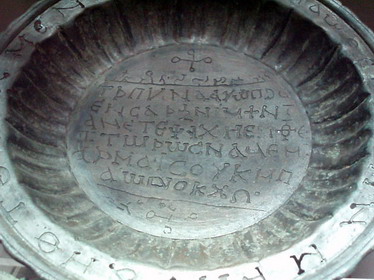
1- Bronze dish with Coptic inscriptions from the 10 century
2- Censer, Ethiopian, with perforated base and dome made of bronze 18 century
3- Crosses from the Byzantine period
4- Different keys from the 13 century
5- The Cross made of Bronze


The wood section

The lack of good wood was always the biggest obstacle that faced wooden crafting in Egypt. However, the Egyptian imported wood since the days of the Pharos and the Copt artists used different kinds of woods like tamarisk, acacia, sycamore, and lebbakh to produce their art.


The museum hosts a big collection of these wooden items that includes:

1- A wooden box with ivory or inbone inlays that was originally intended to store clerical vestments 17-19 century 
2- A wooden door that has many different decoration brought from Marcus church in Rosetta
3- A wooden piece showing people playing music 5-6 century
4- Door decorated with geometric designs and bone inlays from the Mamluk period


5- Wooden chair from the 18th century made out of Arabisc
6- Broken Pediment of the two nude erodes and the cross 4rth century 2

The ivory section:

During the Greek period of the Egyptian history, Alexandria was a major trade point of ivory in the whole world. However, by the times of the Roman rule in Egypt Persia became the most important trade focal point for ivory. 

The Coptic writings section:

One of the most interesting sections of the Coptic Museum as it contains bibles that were written in the 11th and the 13th century on Deer skin in the Coptic and Arabic languages. There is also a very interesting Wooden sickle cell which was used to hold the bible and which goes back to the 14th and the 15th century.

1- A manuscript by St. Mark, St. Mathew, and St. John from 11th century
2- Lectionary of the Gospels according to the Greek rite with titles and simple colors decorations 13 Century


3- Papyrus paper with Christian writings 6-8 century
4- The book of the Psalms as it still has its wooden cover found in Beni Sweif 4-5 century

5- The four Ashier written in Arabic with golden writings

The pottery and glass section:

The Copts, just like any other culture that took place in the Egyptian history took advantage of the good quality of the pottery and glass in Egypt to produce their art. The museum has a lot of pottery items that goes back to the six century AD like :

1- a flask of St. Minas standing between two camels 6-7 century
2- Jar decorated with birds and saints in different posture wearing varied clothes
3- Painted bowel with a flat scalloped rim of alluvial clay with some human decorations 8 century
4- Storage jar painted in columns representing the bust of human figure and animals and birds and floral designs inside vaults 7 century

The cloth and textiles section:

Includes a lot of monks clothes that are decorated with crosses, drawings of the Virgin, and the drawings of the Christ.


1- A fragment woven with woolen thread in tapestry representing a cross decorating with stylized human figures
2- A Kettan robe with ornaments in two columns one is horizontal and the other is diagonal 5-6 century


3- A part of the Coptic wool with two parallel columns of decorations 4-5 century 
4- A piece of cloth showing the Virgin and Jesus 7 century
5- A textile of a cross found in Kellia
6- Christian decorations from Michael monastery in Maser el Qadeema 17 century 
7- Fragment of a curtain or a tunic with tapestry decorations 6-7 century

The Icons section :

The most remarkable and interesting section of the museum. It contains A wide collection of Coptic icons from different ears and with different theme and decorations. One of the styles of these icons is called Frisk which the Coptic artists were affected by the drawings of the walls of the Pharonic temples and they started drawing on the walls of Churches and monasteries. However, because of the persecution of the Romans to the Copts, they started drawing on wood and plaster which can be easily held while escaping an attack on a church or a monastery. The word "Icon" is a Greek word that means a picture and it may contain a drawing of saints or other religious scenes.


1- Icon of St. Andrews the Apostle holding the Holy Bible and a cross 17-18 century


2- Icon of the crowned Virgin holding the Infant Jesus They are between two Saints having halos around their heads. The Virgin's crown is carried by two angles and the Holy Spirit is descending from heaven in the form of dove

3- Icon representing St .Nicolas 19 century
4- Icon representing St. Menas on horse –back holding the bridle with his left hand and piercing a dragon with a long spear with a cross fixed at the top .His crowned head is surrounded by a halo


5- Icon representing St. Victor the martyr wearing a crown on horseback. He holds a cross with his right hand. and the bridle with the left .Under the horse is a dragon representing the devil


6- Icon representing the Virgin and the Infant holding a golden roll in His hand 18 century
7- Icon representing two persons. Ahrakas and Oghani. They wear masks shaped like dog head. They look right towards a bearing fruits tree


8- This famous icon represents the visit of Saint Antony (on the left) to Saint Paul (3rd - 4th century), who lived in retreat in the Eastern Desert near the Red Sea


The last and maybe most fascinating item of the museum is the a hawdage" or a cart" made out of Abanos wood inlaid with ivory and mother of pearl and it was used to transfer rich ladies to Jerusalem in the Roman period.

Hours Of Operation :

Open daily 9 AM-9 PM

Facilities

Cafeteria (coming soon), gift shop, school, luggage office, library (not open to the public)

Guides are not provided. A catalog of the museum collection is available for purchase at the bookstore.
The museum is wheelchair-accessible.

Contact Info.:

Phone: (02) 2362-8766/ (02) 2363-9742

MUSEUM WEBSITE:
https://www.copticmuseum.gov.eg/

NO PHOTOGRAPHY ALLOWED. Cameras must be checked at the museum compound entrance. For special permission, go to the SCA Rules and Regulations page.

Directions

BY METRO: Helwan Line, Mar Girgis station. The museum gate is directly in front of the station.
BY CAR OR TAXI: Ask for "al-met-haf al-qib-tee." Taxi drivers may not be familiar with "al-met-haf al-qib-tee"; it would be very helpful to add that it is close to the mosque of Amr Ibn el-Ass. 
BY BUS: Direction Maadi, get off at Old Cairo Police Station. The museum is located on the opposite side of the street, facing Mar Girgis metro station.

Sunday, 30 July 2017

Wadi El- Natron

Wadi El- Natron

Wadi El- Natron is located 100 km to the north west of Cairo, it is a natural depression in the western desert. Now it is consisting of salt lakes and salt flats laying in the desert.

Wadi el Natorn was very important to the ancient Egyptian since it was where they extracted the Natrun salt. Indeed and become more important during the early era of Christianity in Egypt. Today it is the centre of many monasteries dating back to the fourth century AD.

These monasteries are: 

-The Monastery of Deir abu makar ( st. Makarous)

-The Monastery of Deir Anba bishoy ( St bishoi)

-The Monastery of Deir el Surian

-The Monastery of Deir EL Baramous

Deir Abu Makar (St. Makarous)

It is located 4 km of the Alexandria desert road, it consists today of  manyDier Abu maker remains of a much greater site. The  importance of this place today rises from the fact that here  St Makarios  who was the son of An Egyptian priest who lived here in 330 AD,  he became the  spiritual leader  of the Christian hermits and monks in the area, he was  buried in the monastery , and later about 9 Patriarchs were buried in the same monastery.


The site of monastery  is consisting of several churches, frequently  destroyed and currently  being rebuilt , the main site consist of the cell of chrism and the fluid said to be used to embalm Jesus Christ. The monastery still contains religious painting and frescos that goes back to the 5 century Ad. The monastery is not open for visitors
------------------------------------------------------------------------------------------------------

Deir Anba Bishoy (St. Bishoy)

One of the mot important monasteries today in Wadi El- Natroun is Dier Anba Bishoi ( Bischoi) it was named after the Patron Saint St. Bishoi who immigrated to the site and lived in here in solitude. Dier  Anba  bishoi

Then monastery was restored several times after it has been destroyed at the hands of the barbers. and Bedouins.  It has 5 churches the main one is the St Bishoi church which goes as early to the 9 century Ad.  This church today is only used during the summertime.

To the east of this church lies another one known as the church of Al- Adra (the virgin), but this one is only  used during the winter month.   


At the second flower of the monastery which goes back to the 12 century Ad, there is the church of  angel.  Also there is the charge of St. George which is not used at all. The monastery contains the remains of St. Bishoi, and Ephraim the Assyrian, and Paul of Tomah. 


---------------------------------------------------------------------------------------------------

Deir El Surian (The Syrian Monestary)

It is located to the north west of  St Bishou monastery almost 400 meters away.  Women are not allowed into this monastery. The monastery goes back the 6th century AD, Dier AL Syrianthe monastery was  built by some of the orthodox monks for the monastery of Bishouy who had a dispute with other monks in the monastery about the status of the virgin Mary. They called it the theocratic ( Mother of god)

Later the monastery was abounded and then it was  sold to group of  Syrian  monks. The monastery contains  It has a an olive press, large farm attached to it and a library

The monastery consisting of the following churches:

1- The Church of El -Adra (church of the Virgin) which is considered the main church. Which is used during the summer month  
2- Church of Sitt Mariam ( lady Mary), they also call it the  cave church.  It stores the relics of St. John Kame the black who died in 656AD
3-The Church of the forty martyrs
4-The Church of  Hinnes and Marutha, who bought this church for the Syrian monks.
5-  In the second flower of the monastery  lie the churches of St. Michael. 


------------------------------------------------------------------------------------------------

Deir El Baramous 

This  monastery is the  furthest of all , it is located at the  extremeDier EL Barmous   north west  east of Wadi EL Natroun and almost 14 km from the main entrance road to the valley. 

The name Deir EL Baramous means, the monastery of the Romans.  It was named so since the area traditionally was famous for being the spot where two Roman priests, fled the Christian persecution during the roman times, have lived here and established this monastery

The monastery like other was badly destroyed and rebuilt and fortified. It has many churches such as:

1- The church of El- Adra.
2- Church of Anba Tadrous.
3- Church of  St John the Baptist.
4- Chapel of Mari Gerges.
5- Church of angel Michael with dome covered hykal

The Church of Saints Sergius and Bacchus

The Church of Saints Sergius and Bacchus

The church of St. Sergio (also known as St. Sergius or Abu Serga) was built in the centre of the Ancient Roman fort of Babylon. The church is considered as one of the sites visited by the Holy Family during their escape from King Herod to the land of Egypt.

The church most probably dates back to the 5th Century, although some historians believe that it was actually built in the 8th Century. We are not sure of the origin of Saint Sergius, as in the history of the Coptic Church there are two Saints with the same name. The first one was an Egyptian who died, together with his father and sister, during the intense Christian persecution. People today celebrate his memory every year on the 7th of February. The second one was a servant of the Roman Emperor Maximilian, and he was martyred in Syria at the beginning of the 4th Century.


The Church takes the shape of a basilica with a narthex, a nave, and 2 aisles, which are separated from the nave by 12 columns with Corinthian capitals, 10 of stone, one of marble and one of rosette granite. There are 3 Sanctuaries on the east side; each Sanctuary contains an altar, with a wooden dome, supported by 4 marble columns. The dome of each altar has religious scenes of Christ, Angels, and the 4 evangelists. There is a pulpit on the northeast side of the nave, which is made of marble, though originally it was made of wood, incrusted with ebony and ivory.

The pulpit is used once, each year, in the prayer of Great Friday. The central Sanctuary has a wooden screen, which dates back to the 13th Century, incrusted with panels of ebony and ivory. The frieze and the icons of the church are remarkable, most date back to the 15th and 16th Centuries, some were damaged and restored later.
One of the most important locations in this church is the cave in which the Holy Family stayed during their journey into Egypt. It has a nave and 2 aisles and the ceiling is domed. At the end of the southern aisle of the Cave, is a baptistery.

On the 1st of June, each year, the church of St. Sergio commemorates the arrival of the Holy Family by having prayers inside the church of the cave.

The Hanging Church

The Hanging Church

The Hanging Church is considered the oldest church in the area of Al-Fustat (Old Cairo).

It is known as Al-Muallaka (the hanging) because it was built on the ruins of two old towers that remained from an old fortress called the Fortress of Babylon. It was dedicated to The Virgin Mary and St. Dimiana. 


It dates back to the end of the 3rd Century A.D and the beginning of the 4th Century A.D, but it has been reconstructed and renovated several times since. Some historians believe that it was built earlier, and it might have been a Roman Temple that was later converted to a Roman Church, and at a later date still, it became a Coptic Church. This was proved by the discovery, in 1984, of the scenes, on the western side of the right aisle of the church, which contained pagan Roman Gods, but layers of plaster had covered them.

This church has played an important role in the history of the Coptic Church because it became the seat of the Patriarchs after transferring it from Alexandria to Al-Fustat. The 66th patriarch Anba Christodolos (1039-1079 A.D) was the first Pope to chant the Holy Liturgy in the church. This was maintained in El-Mullaka Church until the 14th Century, when it was transferred to Abu Sefein church.

There are 110 icons here, the oldest of which dates back to the 8th Century, but most of them date to the 18th Century. Nakhla Al- Baraty Bey gave some of them as gifts, in 1898 A.D, when he was the overseer of the church.

The French monk Vansleb, who was sent to Egypt in 1671 by King Louis XIV in order to study the state of the churches and the monasteries of Egypt, mentioned that he had seen on one of the walls of the Hanging Church, inscriptions written by the hand of the great Muslim commander Amr Ibn El-As, asking the Muslim people to treat this church with respect. 
The Plan of the Church:

It takes the shape of a basilica and it has a wooden roof in the shape of Noah's Ark.

The church was once very spacious but it became much smaller, throughout the ages, after several modifications. Obeid Bin Khozam did the last modification in 1755 A.D. It now measures 23.5m in length, 18.5in width and 9.5m in height. 

It consists of the following elements:

1- Entrance known as The narthex.

2- The nave and the two aisles.

3- The three Sanctuaries (located to the east of the church, the most important being the middle one, which is dedicated to The Virgin Mary)

Some steps lead to the middle entrance. On both sides of this entrance there is a door that leads to 2 upper floors, dedicated to the dwelling of the priest.

In front of the entrance there is a vestibule that was used as a resting place for visitors. 

Inside, the southern aisle is separated from the nave by 8 marble columns, linked from above with a wooden architrave, which is supported on arches. The northern aisle is also separated from the nave by 8 marble columns but there is no architrave. 

Nearly in the middle of the southern aisle there is a door, which leads to a small church with a sanctuary. Inside this small church there is a baptistery, which is a deep basin of reddish granite, which probably dates back to the 5th Century. It is decorated for the sign of water in Hieroglyphics.

Of the three sanctuaries situated on the eastern side, the most important is the middle one, which is dedicated to the Virgin Mary. In the centre of this main sanctuary there is an altar made of marble. Above it there is a wooden dome, supported by 4 marble columns, and decorated with religious scenes, such as Jesus on his throne surrounded by the four evangelist saints, the disciples, and angels. 

In front of the middle altar, in the nave of the church, is a pulpit that stands on 15 columns, decorated with reliefs and mosaics, symbolically representing Jesus, the 12 Disciples, John the Baptist and the Virgin Mary. 

There are 7 altars in the Church, 3 of them situated in the main sanctuary, and 3 located in the right sanctuary, among which is the altar of Tecla Hymanot, the Ethiopian Saint, and another that was recently discovered in the northern side.